Gadgets and Tech Reviews

Monday, November 1, 2010

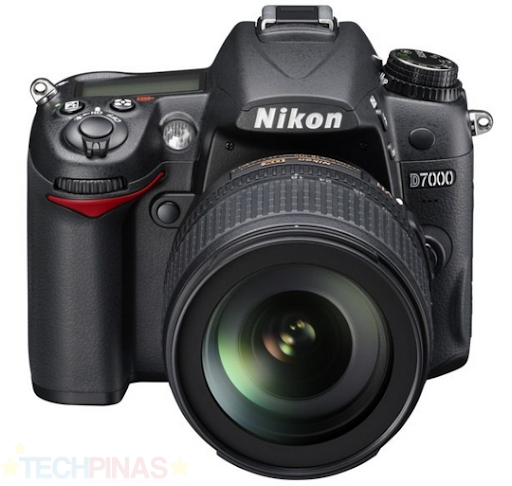
Nikon D7000 DSLR; Goodbye D90

16MP Nikon D7000 has landed --
What's new with Nikon D7000?

D7000 incorporates a freshly-designed 16.2-megapixel sensor coupled with Nikon's EXPEED 2 processor. With this combo, Nikon aims to up its analog-to-digital conversion to 14-bit processing, which should produce better dynamic range. Nikon D7000 also gets a new metering sensor, a viewfinder with 100% scene coverage and a more sophisticated autofocus system that's presumably better than D90 in sensitivity.

Shoots 1080p HD Videos with Continuous AutoFocus

Like previously announced Nikon D3100, D7000 records 1080p High-Definition videos with full-time autofocus (or autofocus while capturing the video). Users will have to keep in mind, however, that there's a 20 minute limit on uninterrupted video captures; While that's clear limitation in this department, Nikon tries to compensate by giving D7000 an added control dial for adjusting shooting modes and stereo mic input.

Stellar Build

Nikon D7000's body consists of a magnesium-alloy shell and a shutter system that's 150,000 cycle-rated. Additionally, D7000 is dust and moisture sealed and features Nikon's dust reduction system to keep image-degrading particles away from the image sensor.

Pricing and Availability

Nikon D7000 dSLR is slated for October 2010 release. Suggested retail price is $1,199.95 (body only) and $1,499.95 (with 18-105mm lens). No word yet on its availability in the Philippines

Specification

16.2MP CMOS sensor
3-inch TFT LCD display
39-point AF system
6fps continuous shooting
ISO 100 to 6400 (ISO 25600 extended)
Dual SD card slot
Live View
Full HD movie recording (1920×1080p @ 24 fps)
Weight: 780g w/ battery

The D7000 will replace the mid-range position of the D90 which it held for about 2 years now. The D7000 can also shoot Full HD video with continuous autofocus.

Wednesday, February 10, 2010

Prepeat inkless and tonerless rewritable printer

image

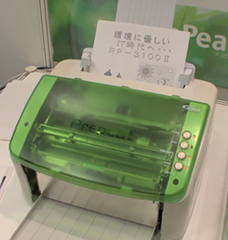
Inkless / tonerless printers aren't exactly new, but here's a more novel approach: inkless, tonerless, and completely reusable. The PrePeat rewritable printer is exactly that: using special paper made of PET plastic, you can make all the flowcharts and meeting notes you need, and when you want to start fresh, feed the paper back in to start fresh. Upfront cost is 500,000 yen (about $5,600 in US) for the printer and 300 yen for each sheet, in lots of 1,000 -- which we're taking to mean at least another 300,000 yen / $3,360 to get some use out of it. Each piece of paper is said to work about 1,000 times, but no word on how much (if any) history can be extracted from the materials -- just keep that in mind should sensitive information be your daily trade. Video demonstration after the break.

Samsung's first Bada phone with Super AMOLED to be announced on February 14th?

By now you're undoubtedly aware than Samsung has a new smartphone OS (Bada) and touchscreen technology (Super AMOLED) in the works. In this case, putting 2 and 2 together yields 14, a number that matches Samsung's February 14th press event at Mobile World Congress. How so? Well, first of all, Sammy is promoting the Samsung Unpacked teaser page from its Bada site. The ocean-themed teaser ("bada" means "ocean" in Korean) says, "on 2.14 a new mobile from Samsung is born. See it first in Barcelona." A quick look at the teaser site's source reveals the keywords "Bada," "smartphone," and "AMOLED." In other words, you can bet that Samsung will be unveiling a 3.3-inch, 800 x 480 pixel Super AMOLED (already rumored for a next week reveal) touchscreen Bada phone on February 14th.


P.S. The image above comes courtesy of GSM Arena. While the site won't say what the device is on the left it's clearly running Samsung's Bada UI and is likely AMOLED judging by those deep blacks. The display is also slightly smaller than the iPhone 3G's 3.5-inch display. Gee... what could it be?

http://www.samsungunpacked.com/